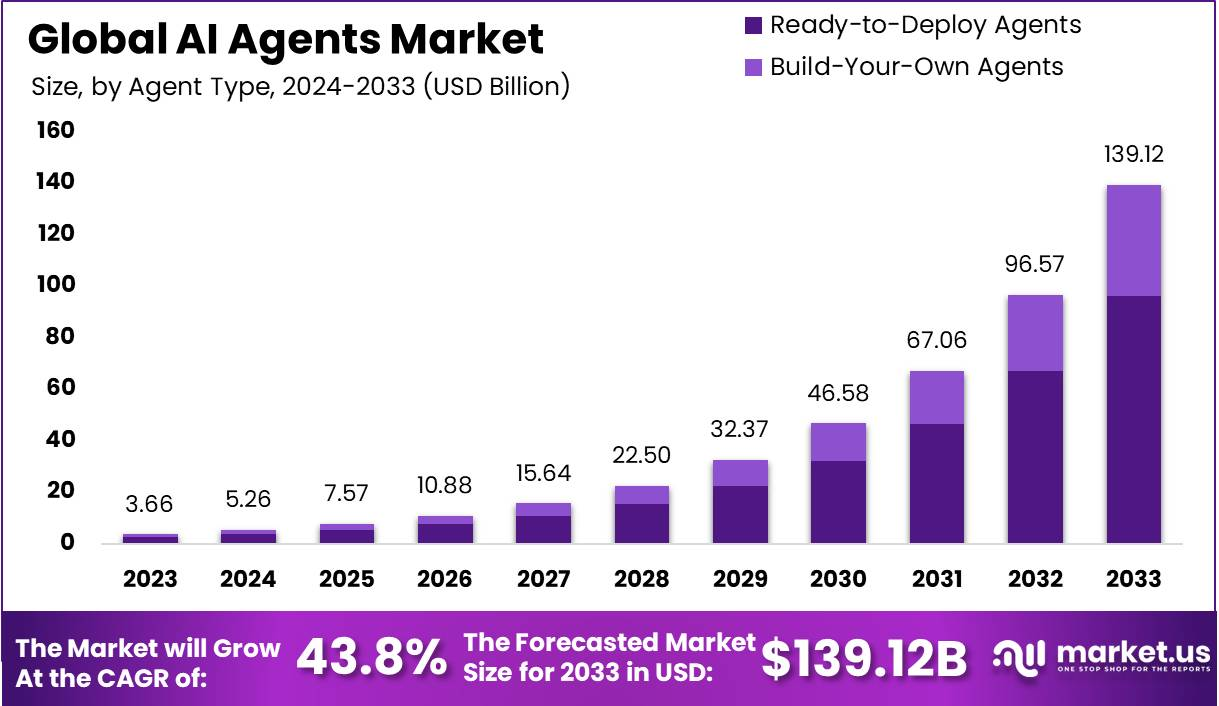
Something shifted in 2025. Developers stopped building chatbots and started building agents. If you've been anywhere near the AI space this year you've seen the term everywhere. AI agents, autonomous agents, agentic workflows, multi agent systems. But most of the explanations out there are either way too academic or just marketing fluff from big tech companies trying to sell you their platform.
So here's the practical version. What AI agents actually are, why developers are obsessed with them, what they're actually good at, and where they fall apart. No hype, just what I've learned from building with them for the past year.
What is an AI agent, really?
An AI agent is software that uses a large language model to make decisions and take actions on its own. Not just answer questions. Actually do things.
That sounds simple but the difference is massive. A chatbot can tell you how to query a database. An agent will write the query, run it, check the results, realise the data looks wrong, fix the query, run it again, and give you the clean answer. Without you touching anything.
The building blocks are straightforward. You have an LLM doing the reasoning. You have tools the agent can call like APIs, databases, file systems, web browsers. You have a loop where the agent thinks about what to do, does it, observes the result, and decides the next step. That loop is what makes it an agent instead of a chatbot.
Why 2026 is the year of AI agents
Three things happened at once.
What developers are actually building with agents
The real use cases aren't the flashy demos you see on Twitter. They're boring, practical, and genuinely useful.
Coding assistants that don't just suggest code but actually run tests, check for errors, look at the existing codebase for patterns, and submit pull requests. Cursor, Copilot Workspace, and Claude Code are all heading in this direction.
Sales agents that research prospects, personalise outreach, track responses, and update the CRM. Not spammy automation but actual intelligent follow up based on context.
The common thread is agents replacing workflows that involve multiple steps, multiple tools, and decisions along the way. Anything where a human is basically following a checklist can probably be an agent.
The frameworks everyone is using
If you're getting started with AI agents in 2026, these are the frameworks worth knowing.
Most popular, biggest ecosystem. Maximum flexibility. Can feel over engineered for simple cases.
Built for multi agent systems. Define agents with roles and goals. Simpler API for team setups.
Microsoft. Conversational multi agent workflows. Steeper learning curve, impressive results.
Newest, simplest. Fast if you're already in the OpenAI ecosystem.
The honest truth is the framework matters less than people think. Pick one, build something, and switch later if you need to. The concepts transfer across all of them.
Where AI agents fall apart
Nobody talks about this enough. Agents break in ways that are completely different from traditional software.
Every major framework gives your agent amnesia by default. The session ends and everything is gone. This is the single biggest gap in agent infrastructure right now.
This is the reason we built Octopoda.
Coordination is the fifth challenge. When you have multiple agents working together, who knows what? How do you prevent Agent A and Agent B from contradicting each other? Shared memory spaces and conflict detection aren't nice to haves. They're essential for any serious multi agent system.
How to get started building AI agents
If you're new to agents, here's the practical path.
Start with one agent, one task
Don't jump to multi agent systems. Pick something you do manually with multiple steps. Automate it.
Pick a framework and commit
LangChain for flexibility. CrewAI for multi agent. OpenAI SDK for simplicity.
Add memory early
Don't wait. Memory architecture affects everything. Three lines of Octopoda code and your agents remember across sessions.
Build in observability
Log every decision and why. You will need this when something goes wrong.
Monitor costs
Track token usage per agent, per task. One runaway loop can cost more than your monthly budget.
Test the unhappy paths
Give agents ambiguous inputs, contradictions, edge cases. Failures teach more than successes.
Where this is all heading
The agent space in 2026 feels like web development in 2005. The tools are rough, the best practices are still being figured out, and the people building now are going to have a massive head start.
If you're a developer and you haven't built an agent yet, now is the time. The learning curve has never been lower and the opportunity has never been bigger.
